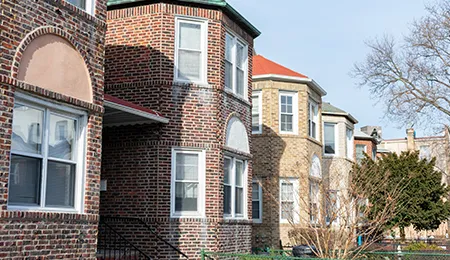
 Moving From Queens to Garden City, NY: What Homeowners Should Know Before Relocating
What should you know before moving from Queens to Garden City, NY?
Before moving from Queens to Garden City, NY, you should understand your current home's potential market value, estimate your available equity, and establish a comfortable budget for your next purchase. You'll also want to compare Nassau County property taxes, Garden City village requirements, home condition, transportation options, and total ownership costs while coordinating the timing of your Queens sale and Garden City purchase.
Moving From Queens to Garden City, NY Starts With Your Current Home
If you're considering moving from Queens to Garden City, NY, you may already be exploring available Long Island properties.
Perhaps you're looking for additional interior space, a different floor plan, more storage, or outdoor property.
Maybe you're interested in a particular architectural style or want to change your housing situation while maintaining transportation access toward Queens or Manhattan.
But if you already own a home in Queens, your relocation strategy should begin with the property you have today.
Your current home may influence your purchasing budget, down payment, available cash reserves, and closing timeline.
Instead of treating your Queens sale and Garden City purchase as separate transactions, approach them as two connected parts of one move.
Understand What Your Queens Home May Realistically Sell For
Before establishing your Garden City purchase budget, develop a realistic understanding of your current property's market position.
A personalized market analysis should consider:
- Relevant recent comparable sales
- Current competing Queens listings
- Property type and layout
- Interior condition
- Renovations and documented improvements
- Usable interior space
- Lot characteristics, where applicable
- Property-specific location
- Current buyer activity
Automated valuation websites can provide a starting point.
However, they may not fully account for the individual features that distinguish your home from nearby properties.
If your next purchase depends on your Queens sale proceeds, a property-specific analysis provides a stronger planning foundation.
Your Queens Sale Price Isn't the Same as Your Available Equity
Suppose your Queens property sells for an attractive price.
That entire amount doesn't automatically become your Garden City down payment.
You need to account for your remaining mortgage balance and applicable selling expenses.
Your estimated net proceeds provide a more useful picture of the funds potentially available.
Consider this hypothetical example:
| Item | Amount |
|---|---|
| Estimated Queens sale price | $900,000 |
| Remaining mortgage balance | $320,000 |
| Estimated selling expenses | $50,000 |
| Estimated net proceeds | $530,000 |
These figures are illustrative only, not actual Queens market statistics or a transaction-specific estimate.
Your actual proceeds will depend on your sale price, mortgage payoff, and applicable expenses.
Then ask yourself:
How much of that equity do I actually want to use?
Available equity and your preferred down payment aren't necessarily the same amount.
Don't Automatically Use Every Dollar of Your Equity
Your current home may provide substantial purchasing flexibility.
But that doesn't mean you need to purchase the most expensive Garden City property possible.
You may want to preserve money for moving expenses, furniture, repairs, renovations, landscaping, insurance, future maintenance, and cash reserves.
The objective isn't simply to purchase another property.
It's to remain financially comfortable afterward.
Define Why You're Leaving Queens
Before touring Garden City homes, identify what you're trying to accomplish.
Do you need more interior space?
A dedicated workspace?
Additional storage?
Outdoor entertaining areas?
A different layout?
A particular architectural style?
A different transportation routine?
Write down your priorities.
Then evaluate each property against those objectives.
Your next home should accomplish the reasons you're moving—not simply provide a different address.
Understanding Garden City's Location and Municipal Structure
Garden City is an incorporated village in Nassau County, Long Island.
It has its own municipal government and is near Mineola, Hempstead, Stewart Manor, and other Nassau County communities.
Official municipal information is available through the Village of Garden City.
Garden City is distinct from Garden City Park, an unincorporated community within the Town of North Hempstead.
That distinction matters because municipal requirements, permits, services, and applicable taxes can differ.
Before purchasing, verify the individual property's jurisdiction.
Understand Garden City's Village Requirements
Because Garden City is an incorporated village, certain property-related matters may be administered through village authorities.
Depending on the property, relevant questions may involve:
- Building permits
- Renovation approvals
- Property-related certificates
- Zoning requirements
- Municipal records
- Village-related obligations
- Local services
Your attorney and appropriate professionals can help clarify transaction-specific questions.
Understanding these requirements before purchasing can help you make a more informed decision.
Compare Your Queens and Garden City Ownership Costs
One of the most important relocation exercises is comparing your current housing expenses with the potential costs of your next home.
For your Queens property, estimate your current mortgage payment, property taxes, insurance, utilities, maintenance, and exterior responsibilities.
Then calculate the same categories for the Garden City property.
Include:
Purchase price + financing costs + property-specific taxes + insurance + utilities + landscaping + maintenance + expected repairs and improvements.
Now you're comparing the complete financial transition rather than simply comparing purchase prices.
Garden City Property Taxes Need to Enter Your Budget Early
Don't wait until you're preparing an offer to investigate property taxes.
Official assessment information is available through the Nassau County Department of Assessment.
Because Garden City is an incorporated village, investigate applicable village-related tax components and services.
Current tax information may reflect exemptions or circumstances associated with the existing owner.
Your attorney and appropriate professionals can help clarify transaction-specific questions.
Two homes with similar asking prices may have different tax obligations.
Those differences belong in your ownership budget.
A Different Home Can Change More Than Your Mortgage
Suppose your Garden City property offers additional interior space and outdoor property compared with your current Queens home.
Your mortgage payment may change.
But so might utilities, landscaping, exterior maintenance, insurance, repairs, and future improvements.
Those expenses may be worthwhile.
The important thing is understanding them before committing.
Decide How Much House You Actually Need
Additional square footage can be valuable.
But more space also means more to furnish, clean, heat, cool, maintain, and eventually repair.
Ask yourself:
How will I use the additional rooms?
Do I need the extra space?
Does the layout improve my routine?
Am I paying for rooms I won't regularly use?
A smaller home with a functional layout may sometimes provide a better ownership experience than a larger property with unnecessary space.
Garden City's Architectural Character: What Buyers Should Consider
Individual Garden City properties may feature distinctive architectural elements.
Depending on the home, these could include original woodwork, fireplaces, built-in cabinetry, exterior detailing, or other design characteristics.
Those features may contribute to the property's appeal.
However, architectural character should be evaluated alongside physical condition, functionality, maintenance, and renovation requirements.
A visually distinctive home may also contain older components that deserve careful review.
Appreciate the architecture, but understand the responsibilities that come with owning it.
Layout May Matter More Than Square Footage
During a showing, imagine you've already moved in.
Where do you enter?
Where do groceries go?
How does the kitchen connect with the living areas?
Where would you work?
How much storage exists?
Which rooms would you actually use?
How do you reach outdoor areas?
Two homes with similar reported square footage can function very differently.
Buy useful space.
Evaluate Storage Carefully
If additional storage is one reason you're leaving Queens, investigate it during showings.
Look at closets, pantries, garages, utility spaces, and other available storage areas.
Imagine your actual belongings there.
A professionally presented property may contain considerably fewer items than you'll bring after closing.
Make sure the new home genuinely improves your situation.
Understand the Property as It Exists Today
Individual homes can change substantially over time.
If a Garden City property has additions, conversions, renovations, or other significant modifications, investigate what was completed.
Ask what documentation is available where relevant.
Your attorney and appropriate professionals can help evaluate transaction-specific questions involving permits, certificates, surveys, title, and related records.
The objective isn't to assume modifications are problematic.
It's to understand what you're buying.
Don't Let One Renovated Room Define the Home
A beautifully updated kitchen can make a powerful first impression.
So can a renovated bathroom.
Still evaluate overall condition, layout, storage, natural light, lot, exterior, major components where appropriate, transportation, taxes, insurance, and maintenance.
Ask what was updated—and what wasn't.
Decide Your Renovation Tolerance Before Relocating
Moving already involves considerable coordination.
Do you also want to manage construction?
Some buyers are comfortable purchasing a property that needs substantial updating.
Others want to unpack and settle in.
Know whether you're primarily a:
Move-in-ready buyer: You prefer relatively little immediate work.
Cosmetic-update buyer: You're comfortable making manageable changes over time.
Renovation buyer: You're willing to undertake significant projects to obtain the underlying property you want.
All three approaches can work.
The mistake is buying a renovation project when you don't actually want one.
Don't Underestimate "We'll Fix It Later"
Renovation can sound straightforward during a showing.
A kitchen.
Bathrooms.
Flooring.
Lighting.
Paint.
Exterior improvements.
But those projects can involve substantial money, time, professional coordination, and disruption.
If the property only works after significant improvements, investigate realistic costs and timing before making an offer.
Potential needs a budget.
Focus on Property Characteristics That Are Difficult to Change
Give appropriate weight to location, lot, natural light, orientation, fundamental architecture, and certain aspects of layout.
Cosmetic finishes are generally more flexible.
A permanent property characteristic that doesn't work for you may be much harder to address later.
Decide How Much Outdoor Property You Want
Additional outdoor space may be one reason you're considering Garden City.
Define how you want to use it.
Gardening?
Outdoor entertaining?
Recreation?
Privacy?
Additional separation?
Then evaluate the actual lot.
More land isn't automatically more useful.
The right property provides outdoor space that supports your plans.
More Outdoor Property Means More Maintenance
Depending on the home, exterior ownership may involve lawn care, landscaping, tree maintenance, irrigation, driveways, walkways, patios, decks, fences, and seasonal cleanup.
Those responsibilities may be worthwhile.
Just make sure they're included in your budget and expectations.
Garden City Has Long Island Rail Road Service
Garden City has LIRR transportation options associated with the Hempstead Branch.
Stations serving the area include Garden City, Country Life Press, and Stewart Manor.
If you expect to continue traveling regularly toward Queens or Manhattan, rail transportation may be an important consideration.
Current schedules and station information can be verified through the Long Island Rail Road.
But don't stop at the fact that Garden City has stations.
Your actual commute begins at the individual property.
Calculate Your Complete Door-to-Door Commute
For each serious Garden City home, ask:
How would I reach the station?
How long would that take?
Would I walk, drive, or use another transportation option?
Which train would I realistically use?
Would I need a transfer?
What happens at my destination?
How does the return trip work?
If you'll primarily drive, evaluate that route too.
Compare the complete journey rather than relying on a generic commute estimate.
Compare the New Commute With Your Queens Routine
Use your current commute as the baseline.
How much does the trip change?
How frequently will you make it?
What are you gaining from the Garden City property in exchange?
More interior space?
Outdoor property?
Better storage?
A layout you prefer?
A different ownership experience?
That's the real relocation tradeoff.
Test Transportation Under Realistic Conditions
A weekend showing may not represent your weekday routine.
If transportation matters significantly, experience your likely route under realistic conditions when practical.
That can reveal differences generic estimates don't fully communicate.
Explore Garden City Beyond the Listings
Not every visit should involve a real estate showing.
Return without an appointment.
Run an ordinary errand.
Test transportation.
Explore shopping areas, restaurants, public parks, and other destinations relevant to your interests.
Drive routes you expect to use regularly.
Come back at another time.
You're not trying to determine whether Garden City is universally better than Queens.
You're determining whether your everyday routine works from the individual property you're considering.
Compare Garden City With Nearby Communities
Depending on your budget and priorities, your search may also include Mineola, Stewart Manor, Garden City Park, and nearby Nassau County locations.
One property may offer stronger condition.
Another may provide more usable outdoor space.
A different home might create a transportation routine you prefer.
Let actual properties compete rather than relying on broad community rankings.
Your Queens Sale and Garden City Purchase Need One Strategy
If your Queens sale proceeds are needed for the purchase, establish your preferred sequence early.
Three common scenarios deserve consideration.
Option 1: Sell Your Queens Home First
Selling first may give you greater certainty about available proceeds.
However, you'll need a plan if you haven't found your next home by the time your sale closes.
Option 2: Buy Your Garden City Home First
Purchasing first may provide more flexibility when selecting a property.
However, it can require sufficient resources to manage overlapping ownership expenses.
Option 3: Coordinate Both Transactions
You may prefer to coordinate your sale and purchase around compatible closing timelines.
This approach requires planning because contract terms, transaction progress, and closing dates can change.
Your attorney and appropriate professionals can help evaluate transaction-specific considerations.
Prepare Your Queens Home Before You Need to Sell Quickly
You don't necessarily need to list immediately.
But preparation can begin.
Understand your home's potential market value.
Identify visible repairs.
Begin decluttering.
Organize relevant property information.
Consider what photography and marketing preparation may require.
If the right Garden City property appears, you'll already understand what needs to happen on the Queens side.
Your Queens Pricing Strategy Should Support the Move
If your transactions are financially connected, your current-home pricing strategy matters.
An unrealistic asking price can interfere with your Garden City purchase timeline.
Your Queens sale strategy should consider relevant recent sales, current competition, condition, preparation, buyer activity, and preferred timing.
The objective isn't simply to ask for the highest possible number.
It's to create a sale strategy that supports the complete relocation.
Evaluate Queens Offers in Context
When offers arrive, price matters.
Depending on your circumstances, financing, contingencies, timing, and transaction certainty may also affect how effectively an offer supports your Garden City purchase.
Your attorney and appropriate professionals can help evaluate transaction-specific terms.
Think about both transactions together.
Preserve Financial Reserves After Closing
A different property may introduce expenses you didn't previously have.
Moving costs money.
Maintenance continues.
Insurance considerations may differ.
You may discover improvements you want to make after living in the home.
Preserving appropriate reserves can provide flexibility.
The question isn't simply:
"Can I buy this Garden City home?"
It's:
"Can I comfortably own it afterward?"
Know Your Walk-Away Point Before Competition Begins
Before making an offer, establish your boundaries.
Comfortable purchase ceiling.
Total ownership-cost limit.
Renovation budget.
Transportation requirements.
Lot preferences.
Condition expectations.
Desired cash reserves.
Then identify which difficult-to-reproduce property characteristics might justify paying more.
Preparation can help you negotiate without abandoning your broader plan.
Ten Questions to Answer Before Moving From Queens to Garden City
Before committing to the move, ask:
- Why am I leaving my Queens property?
- What might my current home realistically sell for?
- What might my net proceeds be?
- How much equity do I want to use?
- What total Garden City ownership cost is comfortable?
- What property-specific taxes and village requirements apply?
- What condition, renovation, or documentation questions should I investigate?
- Does transportation work from this exact property?
- How much renovation and outdoor maintenance am I willing to undertake?
- How should the Queens sale and Garden City purchase be sequenced?
Those answers give your relocation strategy structure.
Final Takeaway: Moving From Queens to Garden City, NY
If you're considering moving from Queens to Garden City, NY, begin with the property you already own.
Understand its potential market value.
Estimate likely net proceeds.
Decide how much equity you want to use.
Then evaluate Garden City properties based on purchase price, village requirements, property-specific taxes, condition, architecture, layout, documented improvements, lot, transportation, renovation needs, insurance, maintenance, and total ownership costs.
Test your commute.
Spend time in Garden City outside of showings.
Determine how much house and outdoor property you actually want.
Preserve appropriate financial reserves.
And coordinate your Queens sale with your Garden City purchase before either transaction creates unnecessary pressure.
As Maureen Folan, Queens & Long Island Real Estate Expert, I help homeowners connect both sides of that transition through one coordinated strategy.
Because moving from Queens to Garden City isn't simply about changing addresses.
It's about making sure your equity, next property, transportation, ownership costs, timing, and everyday routine all support the move you're trying to make. 
Schedule a Queens & Long Island Relocation Consultation
Thinking about selling your Queens home and moving to Garden City?
Schedule a Queens & Long Island Relocation Consultation with Maureen Folan Real Estate Group.
We'll begin by evaluating your current Queens property, discussing how the sale may influence your purchasing strategy, and comparing Garden City and nearby Long Island homes based on your priorities.
Together, we'll develop a plan that connects your sale, next purchase, budget, transportation needs, and preferred timing.
You can also request the Property Tax Guide to help organize important ownership-cost questions before purchasing.
Maureen Folan
Queens & Long Island Real Estate Expert
Maureen Folan Real Estate Group
MaureenFolan.com