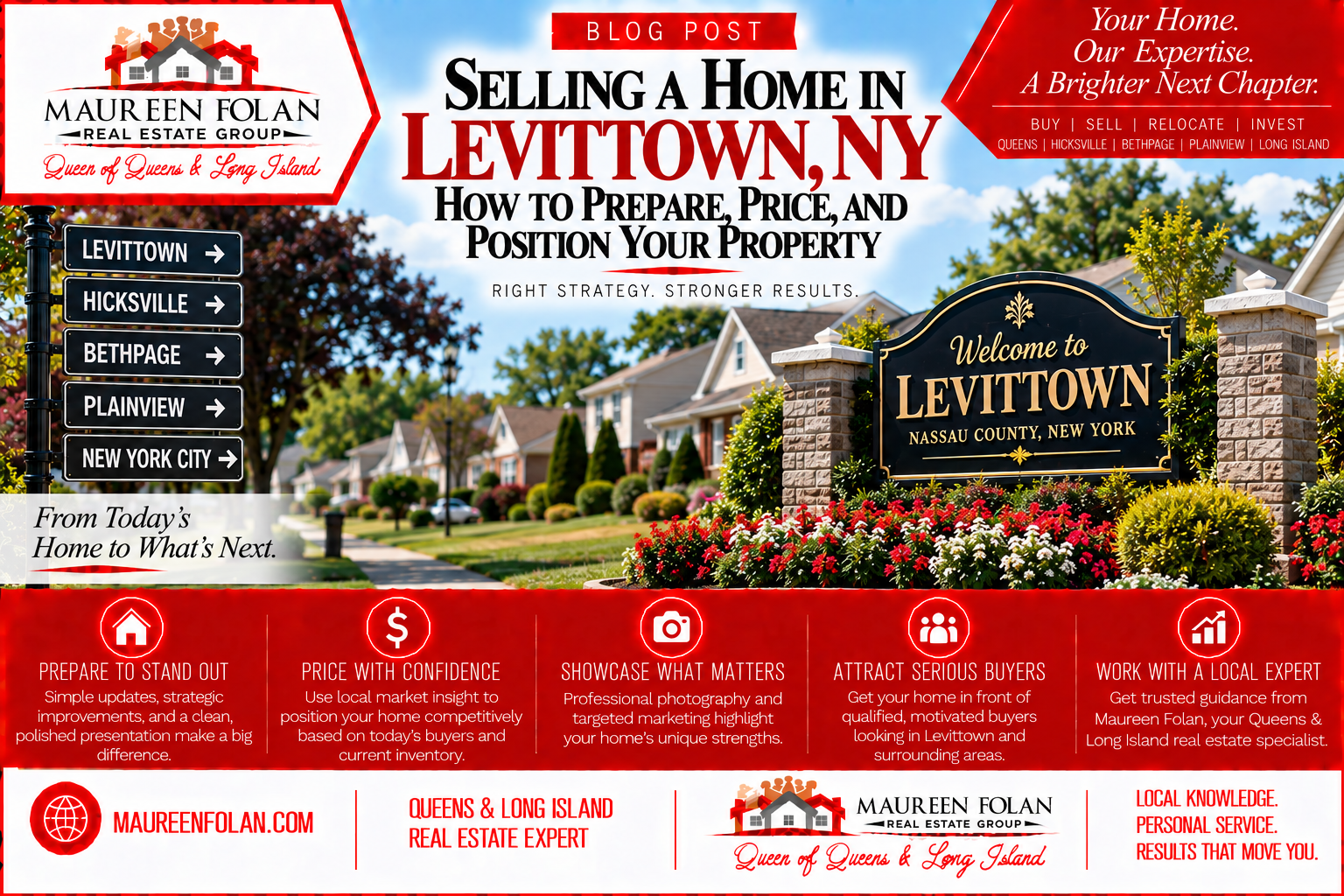
 Selling a Home in Levittown, NY: How to Prepare, Price, and Position Your Property
What should you do before selling a home in Levittown, NY?
Before listing your Levittown home, determine how your specific property compares with the alternatives buyers can purchase today. Your strategy should align condition, improvements, layout, lot, preparation, pricing, professional presentation, marketing, showing access, and your next move so buyers can clearly understand what your home offers.
Selling a Home in Levittown, NY Starts With the Property You Actually Own
If you're considering selling a home in Levittown, NY, your first question may be:
“What is my home worth?”
That's important.
But Levittown sellers should begin with another question:
“What exactly am I selling today?”
Homes change over time.
Layouts can be modified.
Living space can evolve.
Kitchens and bathrooms may be updated.
Exterior spaces can be improved.
Maintenance histories differ.
Two properties that may appear similar at first glance can create very different buyer impressions.
That's why your selling strategy needs to begin with your individual home.
Understand Levittown's Geographic Context
Levittown is a Nassau County community spanning areas within the Town of Hempstead.
Official municipal information is available through the Town of Hempstead.
Nassau County maintains property-assessment resources through its Department of Assessment.
These resources provide useful background.
But your home's market position still depends on the actual property and the competition buyers see when you list.
Start With a Property-Specific Market Analysis
An automated estimate can provide context.
It can't fully evaluate every characteristic buyers may consider.
A property-specific analysis should examine:
- Relevant recent closed sales
- Current competing listings
- Pending activity where useful
- Interior size and usable space
- Layout
- Condition
- Renovations and improvements
- Lot characteristics
- Outdoor areas
- Property-specific location
- Current buyer activity
The goal isn't to locate the highest sale and apply it to your house.
It's to understand which properties buyers would realistically compare with yours.
Don't Assume Similar-Looking Homes Are Equivalent
This becomes particularly important when properties have evolved differently over time.
One home may have an updated interior.
Another may offer a layout buyers find more functional.
One could have more finished or usable space.
Another may provide a more compelling outdoor environment.
When analyzing comparable properties, investigate the actual differences.
A street address and sale price alone don't tell the complete story.
Don't Automatically Anchor to the Highest Sale
Suppose a nearby Levittown property sold for a price you'd love to achieve.
Before adopting that number, investigate why the buyer paid it.
Did the property offer:
Extensive renovation?
A particularly functional layout?
More usable space?
A compelling lot?
Significant outdoor improvements?
Several advantages simultaneously?
Exceptional sales can provide useful information.
But understand what made them exceptional.
Active Listings Matter Just as Much
Closed sales tell you what buyers paid.
Active listings tell you what buyers can choose today.
Imagine historical sales appear to support your intended asking price.
Then several compelling Levittown properties enter the market before you list.
Your buyer sees them too.
Compare:
Condition.
Layout.
Renovations.
Usable space.
Lot.
Photography.
Price.
Your strategy should reflect the competition present at launch.
Your Buyer May Be Looking Beyond Levittown
Depending on budget and priorities, buyers may also consider Hicksville, Bethpage, Wantagh, East Meadow, or other nearby markets.
That means your competitive set isn't defined solely by the community boundary.
It's defined by what the same buyer can reasonably purchase instead.
Ask:
“Which properties are competing for my buyer?”
Price and Condition Need to Align
Your home doesn't need to be completely renovated to sell effectively.
But buyers will consider condition when evaluating price.
Suppose your property has an older kitchen.
A competing home is extensively renovated.
That doesn't automatically make the competing property stronger.
Perhaps your home has:
A layout the buyer prefers.
More useful space.
A stronger outdoor area.
A property characteristic that's difficult to reproduce.
Those strengths matter.
The complete package still needs to make sense at your asking price.
Document Improvements Before You Market Them
If you've improved the property, create an organized record of what was completed.
Depending on the project and transaction, relevant documentation may include permits, certificates, approvals, warranties, receipts, or other records.
Your attorney and other appropriate professionals can help you determine what documentation is relevant to your particular sale.
Don't wait until a buyer asks before beginning to organize what you have.
Don't Assume Every Improvement Adds Its Cost to Value
Maybe you've spent substantial money on the property.
Those improvements can absolutely influence marketability and value.
But the market doesn't simply add your receipts together.
Buyers evaluate the finished result.
They consider:
Quality.
Function.
Design.
Condition.
How the improvement relates to the rest of the property.
How competing homes compare.
Cost and market value aren't identical.
Don't Renovate Before You Know Whether You Need To
You may look around the property and see projects everywhere.
Kitchen.
Bathrooms.
Flooring.
Paint.
Exterior.
Before beginning major work, determine how the home competes in its current condition.
Ask:
What might it reasonably command today?
Which differences actually affect buyer perception?
Which improvements could materially change the competitive position?
Then decide where spending makes sense.
Separate Repairs, Refreshes, and Renovations
Use three categories.
Repairs
Items that are damaged, malfunctioning, visibly deteriorated, or unfinished.
Refreshes
Cleaning, decluttering, lighting, paint, landscaping, furniture editing, and other manageable cosmetic improvements.
Renovations
Major construction involving significant time and expense.
Work through those categories in order.
The larger the project, the stronger the justification should be.
Fix Visible Maintenance First
Before chasing design trends, address the basics.
Look for:
Failed lighting.
Loose hardware.
Dripping fixtures.
Damaged trim.
Sticking doors.
Peeling paint.
Broken exterior features.
Unfinished projects.
A single small issue may not matter.
A collection of them can create a broader impression of deferred maintenance.
Deep Clean Before Replacing Things
Cleaning can have a larger impact than sellers expect.
Pay particular attention to:
Kitchens.
Bathrooms.
Floors.
Windows.
Appliances.
Fixtures.
Cabinet surfaces.
Baseboards.
Storage areas.
Before assuming something looks too old to compete, make sure buyers are seeing it clean and well presented.
Declutter to Reveal the Layout
Too much furniture can hide usable space.
Crowded countertops can make kitchens appear smaller.
Packed rooms can make circulation difficult to understand.
Your objective is to help buyers see:
Room dimensions.
Flow.
Storage.
Natural light.
Architecture.
Start packing what you won't need during the listing period.
You'll need to move it eventually anyway.
Organize Closets and Storage Areas
Buyers may look inside.
Closets.
Pantries.
Garages.
Storage areas.
Basements or other spaces where applicable.
If every area is completely full, buyers may assume the property lacks storage.
Create enough room for them to understand the capacity.
Lighting Can Improve Presentation
Turn on every important light.
Replace failed bulbs.
Clean fixtures.
Evaluate whether a few highly visible fixtures distract from otherwise attractive rooms.
Then consider natural light.
Open appropriate window coverings.
Clean windows.
Remove unnecessary items blocking them.
You want buyers to experience the light the property genuinely provides.
Paint Strategically
Don't automatically repaint the entire home.
Consider paint where existing finishes are:
Damaged.
Heavily worn.
Highly distracting.
Visually inconsistent.
Interfering with photography.
The goal isn't to remove every trace of personality.
It's to prevent wall condition or color from distracting buyers from more important property characteristics.
Exterior Presentation Starts Before the Front Door
Buyers begin evaluating your home outside.
Look at:
Landscaping.
Driveway.
Walkways.
Front steps.
Railings.
Exterior surfaces.
Lighting.
Front door.
Visible maintenance.
Start with care and cleanup.
You don't automatically need expensive exterior improvements.
Pay Attention to the Entrance
Buyers may spend time at the front door while their agent accesses the property.
That gives them an opportunity to notice details.
Check:
Cleanliness.
Door condition.
Paint.
Hardware.
Lighting.
Steps.
Railings.
A small amount of preparation here can improve the beginning of the entire showing.
Make the Yard Easy to Understand
If outdoor space is one of your home's strengths, present it deliberately.
Clean patios or decks where appropriate.
Remove unnecessary objects.
Address visible maintenance.
Edit outdoor furniture.
Trim landscaping where needed.
Help buyers understand how the outdoor area relates to the house.
Mature Landscaping May Contribute to the Property
Don't automatically remove established trees, hedges, or plantings simply because you're preparing to sell.
They may contribute:
Privacy.
Shade.
Visual interest.
Definition of outdoor areas.
Evaluate what needs maintenance and what adds to the property's overall setting.
Kitchens Need Strategy Before Demolition
An older kitchen can make sellers feel pressure to renovate.
Before doing that, ask:
Is it functional?
Is it maintained?
Does the layout work?
How does it compare with competing properties?
Could cleaning, lighting, hardware, or another targeted improvement help?
What would a complete remodel cost?
How long would it delay the listing?
Would buyers value your selections?
Major construction should have a strong reason behind it.
Bathrooms May Need Refreshing Instead
Look at:
Caulk.
Grout.
Paint.
Lighting.
Fixtures.
Mirrors.
Hardware.
Cleanliness.
An older bathroom can still present well.
Don't automatically turn cosmetic age into a full construction project.
Be Careful About Pre-Sale Layout Changes
Major layout changes can become expensive quickly.
Before moving walls or significantly altering spaces, understand what the market currently values about your property.
The existing layout may already appeal to the right buyer.
If a major change is being considered, evaluate the likely competitive benefit before committing.
Professional Photography Is Part of Your Launch
Your first showing may happen on a phone.
Professional-quality photography should help buyers understand:
Exterior.
Primary rooms.
Natural light.
Layout.
Outdoor areas.
Distinctive property features.
The objective isn't to make the house appear unrealistically different.
It's to make its genuine strengths visible.
Photography and Reality Need to Match
If images make rooms appear dramatically larger or condition substantially different, buyers may arrive disappointed.
The stronger reaction is:
“This feels as good in person as it looked online.”
Compelling marketing creates interest.
Accurate marketing supports confidence.
Your Marketing Needs a Clear Property Story
What should buyers remember about your home?
Maybe it's:
The layout.
Usable space.
Condition.
Renovation.
Lot.
Natural light.
Storage.
Outdoor environment.
Property-specific location.
Identify the strongest genuine characteristics.
Then reinforce them through photography and listing copy.
Avoid Marketing Based on Who You Think Should Live There
Describe the property.
Describe verified improvements.
Describe objective transportation and location characteristics where relevant.
Don't define the type of person who supposedly belongs in the home.
The buyer should determine whether the property fits their individual needs.
Property-focused marketing is clearer and more useful.
Pricing Is Competitive Positioning
Your asking price determines which properties buyers compare with yours.
Suppose your home looks compelling at one price.
Increase the asking price substantially.
Now buyers may expect:
More renovation.
More usable space.
A stronger lot.
Additional amenities.
Another property type.
The property hasn't changed.
Its competition has.
That's why pricing is positioning.
“We Can Always Reduce Later” Isn't Risk-Free
Yes, you can reduce the price.
But your property only launches once.
Active buyers may notice the listing immediately.
If they consider it weak value compared with alternatives, some may move on.
A later reduction can improve your position.
It can't guarantee those buyers return.
Don't Price From an Automated Estimate Alone
Automated valuations can provide useful context.
They may have more difficulty evaluating:
Actual condition.
Renovation quality.
Layout.
Usable space.
Natural light.
Outdoor areas.
Current competition.
Presentation.
Property-specific buyer appeal.
Use technology as one reference point.
Then analyze the actual property.
Don't Price Based on What You Need Next
Maybe your Levittown sale is funding another purchase.
Perhaps you need a specific amount for your next down payment.
That's important to your financial planning.
It doesn't establish market value.
Buyers compare your home with their alternatives.
First determine the likely market range.
Then determine whether the expected proceeds support your next move.
Property Taxes Affect the Buyer's Complete Calculation
Buyers may consider property-specific taxes along with price, maintenance, insurance, and expected improvements.
Official Nassau County assessment resources are available through the Nassau County Department of Assessment.
As a seller, understand that buyers may compare complete ownership costs—not simply list prices.
Transportation Should Be Described Accurately
Buyers may evaluate transportation differently depending on where they work and how they travel.
If you're describing access to roads, rail service, or other transportation, use objective and verifiable information.
Avoid generic claims about a “perfect commute.”
A transportation routine that works well for one buyer may not work for another.
Make the Property Reasonably Accessible
Once your home launches, serious buyers need opportunities to experience it.
Establish your showing process before listing.
How much notice do you require?
Which times genuinely don't work?
How quickly can requests be confirmed?
How will the home be prepared?
You don't need unlimited access.
You do want to minimize unnecessary friction.
Market Feedback Begins Immediately
After launch, monitor:
Showing requests.
Second visits.
Buyer questions.
Feedback.
Offers.
New competition.
Competing homes going under contract.
Price changes.
Your original strategy was based on information available before launch.
Now buyers are providing additional information.
Use it.
One Buyer's Opinion Isn't the Market
One buyer may dislike your kitchen.
Another may think it's completely acceptable.
Someone may want more outdoor space.
Another buyer may want less maintenance.
Individual preferences vary.
Look for patterns rather than reacting to every comment.
Low Activity Is Information Too
If showing volume is weaker than expected, investigate.
Is the price aligned?
Are the photographs strong?
Is the home easy to show?
Does condition make sense at the asking price?
Has stronger competition entered?
Low activity isn't a personal judgment.
It's information about positioning.
Multiple Offers Don't Automatically Mean You Underpriced
If several serious buyers compete, you may wonder whether you should have started higher.
Not necessarily.
Competition can indicate that buyers recognized value and had a reason to act.
Evaluate the complete outcome produced by the strategy rather than judging success only by the original asking price.
Evaluate Offers Beyond the Headline Number
Price matters.
Depending on your circumstances, financing, contingencies, timing, and transaction certainty may also matter.
Your attorney and other appropriate professionals can help you evaluate transaction-specific terms.
The strongest complete offer should support what you need the sale to accomplish.
Know Your Next Move Before You List
Where are you going afterward?
Buying another Long Island property?
Moving toward Queens?
Relocating?
Your answer can influence:
Preparation budget.
Timing.
Offer priorities.
Closing preferences.
Desired financial reserves.
A successful sale should support what happens next.
If You're Moving Between Levittown and Queens
Your sale and purchase may be financially connected.
Understand:
Potential sale proceeds.
Available equity.
Next purchase budget.
Desired reserves.
Timing.
Closing preferences.
Maureen Folan's Queens and Long Island focus can help coordinate both sides of the move through one strategy.
What Should Levittown Sellers Do Before Listing?
A practical sequence is:
- Establish a property-specific value range.
- Review relevant recent closed sales.
- Study current active competition.
- Document relevant improvements.
- Identify the home's strongest differentiators.
- Address visible maintenance.
- Deep clean and declutter.
- Organize storage areas.
- Improve lighting where appropriate.
- Evaluate strategic paint and cosmetic refreshes.
- Prepare landscaping and outdoor areas.
- Consider major renovations cautiously.
- Plan professional photography and marketing.
- Establish pricing and showing strategy.
- Connect the sale with your next move.
That's how you prepare for a strategic launch rather than simply putting the property online.
Final Takeaway: Selling a Home in Levittown, NY
If you're selling a home in Levittown, NY, begin with the property you actually own and the alternatives buyers can purchase today.
Understand how your home compares on:
Condition.
Layout.
Usable space.
Lot.
Improvements.
Presentation.
Price.
Then prepare strategically.
Address visible maintenance.
Deep clean.
Declutter.
Organize improvement information.
Prepare the exterior.
Use professional photography.
Price according to the competitive market.
And connect the sale with whatever comes next.
As Maureen Folan, Queens & Long Island Real Estate Expert, I help Levittown homeowners make those decisions before buyers begin comparing their property with the competition.
Because successful selling isn't about making every part of your home new.
It's about making the value of the home you already own easy for serious buyers to recognize. 
Get a Personalized Home Value Estimate
Thinking about selling your Levittown home?
Get a Personalized Home Value Estimate from Maureen Folan Real Estate Group.
We'll evaluate your property's condition, layout, usable space, lot, improvements, relevant recent sales, and current competition to help determine how your home may fit within today's market.
You can also request the Home Seller Preparation Checklist before spending money on repairs, painting, landscaping, staging, or major renovations.
Maureen Folan
Queens & Long Island Real Estate Expert
Maureen Folan Real Estate Group
MaureenFolan.com

